If you manage commercial property in Austin, you've probably been told your parking lot needs sealcoating. What you may not have been told is *when*, or more importantly, *why the timing matters more than the service itself.*
Sealcoating isn't a one-size-fits-all maintenance item. The right schedule depends on your specific lot's traffic volume, sun exposure, existing surface condition, and what products were used last time. Getting the interval wrong, in either direction, costs you money.
The general rule: every 2 to 3 years
For most commercial parking lots in the Austin metro, sealcoating every two to three years is the practical standard. That interval balances protection against UV degradation and water infiltration with the reality that applying sealer too frequently can actually build up excessive film thickness, reducing traction and creating a surface that peels rather than wears naturally.
The key variables that push you toward the shorter or longer end of that range:
Higher traffic and sun exposure push toward every 2 years. Retail centers, restaurant pads, and high-turnover lots take more abuse. Austin's UV intensity, over 200 sunny days per year, accelerates oxidation faster than markets further north. If your lot sees constant vehicle movement and sits fully exposed with no tree cover, two years is likely your interval.
Lower traffic and partial shade push toward every 3 years. Office parks with weekday-only traffic, church lots, and properties with partial canopy coverage degrade more slowly. If your lot looks structurally sound at the two-year mark with only minor fading, you can safely push to three years.
New asphalt requires patience. Fresh asphalt should cure a minimum of four weeks under ideal conditions (around 70°F) before the first sealcoat application. Rushing this causes adhesion failure, the sealer traps volatile oils that need to escape during curing, and you end up with a surface that peels within months.
Why Austin is different from other markets
Two factors make Austin's sealcoating environment unique compared to other Texas cities and the national market.
Austin's high-PAH sealant ban changes your product options. The City of Austin prohibits the use and sale of coal-tar-based sealants and any pavement product containing more than 0.1% polycyclic aromatic hydrocarbons (PAHs) by weight within the city's planning jurisdiction. This isn't optional. Violations carry fines, and each day of a continuing violation is treated as a separate offense.
This means your contractor must use asphalt-emulsion or acrylic sealers instead of the coal-tar products common in other markets. These products perform well, but they behave differently: asphalt emulsion sealers generally require slightly more careful application-rate control and are more sensitive to application temperature than coal tar alternatives. Your contractor should be able to tell you exactly what product they're using, show you the SDS, and confirm it complies with Austin's ordinance. If they can't, that's your signal to find a different contractor.
Austin's heat creates scheduling constraints. Sealcoat manufacturers specify minimum application temperatures (typically 50°F for both surface and ambient temperature, maintained for 24 hours after application), but Austin's challenge runs the other direction. Extreme summer heat can cause sealer to dry too quickly before it bonds properly. The best application windows in Austin are typically March through May and September through November, when temperatures are warm enough for proper curing but not so extreme that the product flashes off before it penetrates.
How to tell if your lot needs sealcoating now
Rather than relying strictly on a calendar, look at your lot's actual condition. Four indicators signal it's time:
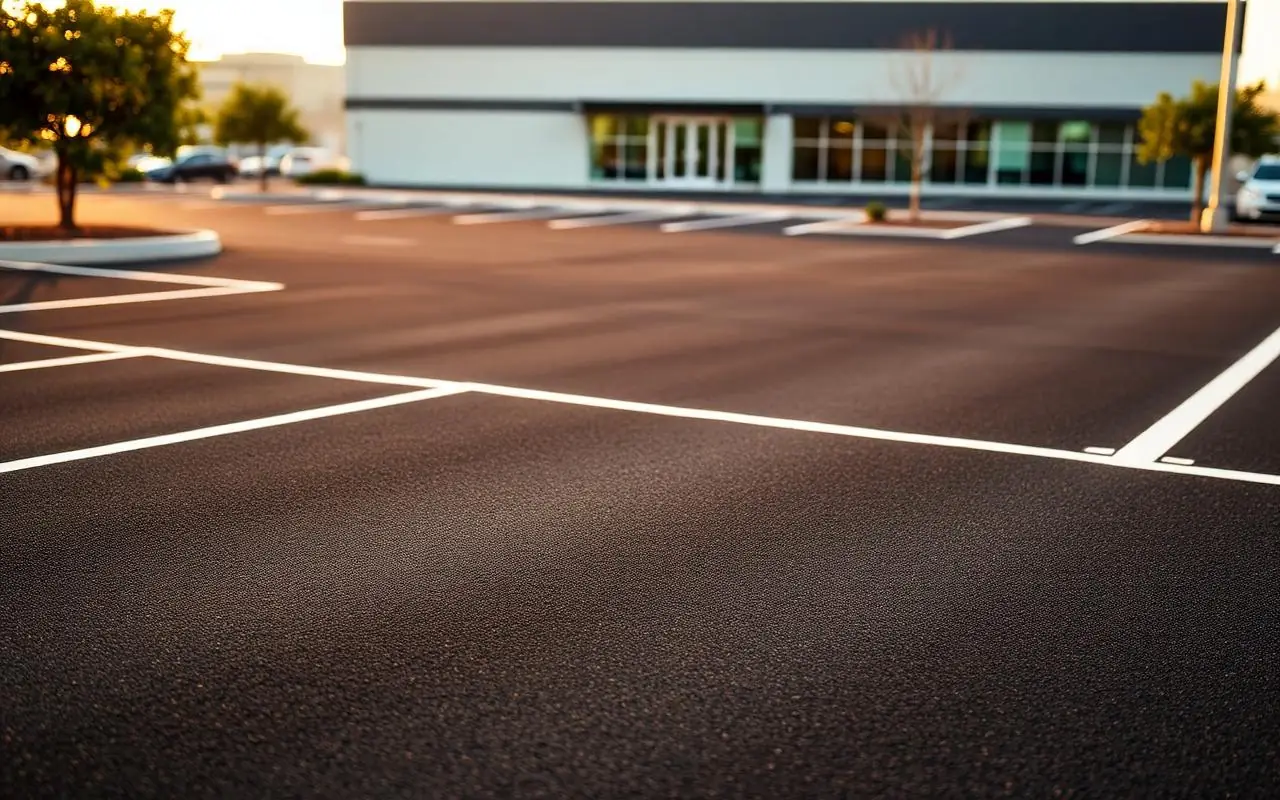
Color shift from black to gray. Fresh sealcoat is dark black. As UV breaks down the surface, it fades to a progressively lighter gray. When your lot looks uniformly gray rather than dark, the existing sealer film is largely degraded.
Surface aggregate is visible. If you can see individual stones in the asphalt surface, the texture looks rough and granular rather than smooth, the binder is oxidized and the surface is losing material. Sealcoating at this stage preserves what's left. Waiting much longer means you're sealing over a surface that's already begun to deteriorate structurally.
Hairline cracking is emerging. Fine surface cracks (not structural cracks that penetrate the full pavement depth) indicate the surface layer is drying out and losing flexibility. Sealcoating fills these hairline cracks and prevents water from reaching the base layer. Once cracks widen beyond about a quarter inch, you're past the sealcoating window for those areas. They need crack sealing first, then sealcoat over the repaired surface.
Water absorbs into the surface rather than beading. Splash some water on the lot. If it beads up and sits on top, your existing seal is still functional. If it darkens the asphalt and soaks in, the surface is porous and unprotected.
What a proper sealcoating job looks like
Knowing the schedule is half the equation. The other half is making sure the work is actually done correctly. A few non-negotiable quality markers:
Surface prep isn't optional. The entire surface must be cleaned, debris, dirt, vegetation, and loose material removed, before any sealer is applied. Oil spots and grease stains require primer treatment. Existing cracks over a quarter inch need to be filled before sealcoating. If your contractor shows up and starts spraying without prep work, they're setting you up for adhesion failure.
Two coats minimum. Manufacturer specifications consistently recommend two coats for performance and durability, with a third coat in high-traffic areas like entrances, exits, and drive lanes. A single coat saves your contractor time and material but doesn't deliver the film build you're paying for.
Application rate matters. Sealer should be applied at the manufacturer's specified rate, typically around 0.11 to 0.13 gallons per square yard per coat for mixed material. Applying too thin wastes your money (inadequate protection). Applying too thick wastes your money differently (excessive material cost, longer cure time, and potential peeling).
Weather windows are non-negotiable. No application when rain is forecast within 24 hours. No application when temperatures are expected to drop below 50°F within 24 hours. A contractor who pushes through marginal weather to avoid rescheduling is gambling with your lot's appearance and your money.
Building a maintenance schedule that actually works
Sealcoating is one component of a broader pavement maintenance program. For most commercial properties in Austin, the highest-return maintenance stack looks like this:
Annual crack sealing to prevent water infiltration and base damage. Sealcoating every two to three years based on condition assessment. Restriping after every sealcoat application (striping is covered during sealcoating and must be reapplied). Ongoing compliance checks for ADA/TAS parking standards, fire lanes, and stormwater requirements.
The most cost-effective approach is bundling these services under a recurring maintenance agreement rather than treating each one as a standalone project. Bundling reduces mobilization costs, ensures consistent scheduling, and gives your contractor enough context about your property to catch problems early rather than reacting to failures.
Want this assessed on your property?
We'll send a documented condition report and quote, within 1 business day, no cost.
Get a free assessment →Field notes from the Austin Pavement Co. operations and compliance team, written for property managers, owners, and facilities teams responsible for commercial pavement.